
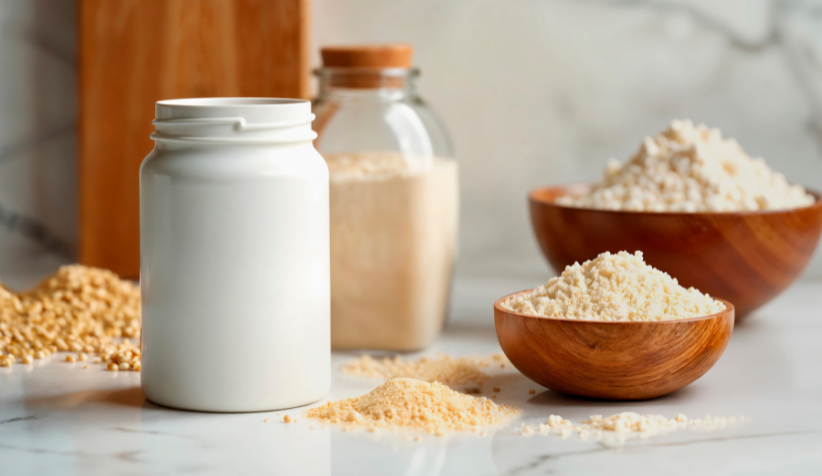
Protein is often evaluated through a narrow lens.
Consumers compare grams per serving, amino acid profiles, and occasionally, price. But one of the most immediate and revealing signals of protein quality appears much earlier, before digestion, before absorption, before metabolic response. It appears the moment protein meets water.
Some protein powders dissolve effortlessly, forming a smooth, uniform solution. Others resist dispersion, clump unpredictably, or leave behind a gritty, sedimented texture. At first glance, this may seem like a minor inconvenience. In reality, it reflects something far more fundamental.
Mixability is not just a sensory attribute.
It is a functional indicator of how a protein has been processed, structured, and engineered for performance.
And increasingly, as the market expands with options ranging from plant based protein powder to high quality protein supplements, it is becoming one of the most overlooked yet informative markers of ingredient quality.
Mixability Is a Reflection of Molecular Behavior
When a protein powder meets liquid, what appears to be a simple act of mixing is, in reality, a highly complex physicochemical interaction.
Particles must rapidly hydrate, disperse uniformly, and remain suspended without aggregation or sedimentation. This requires a precise balance of structural attributes, particle size distribution, surface area exposure, and the protein’s molecular affinity for water.
Proteins that mix seamlessly are not just “better blended”, they are structurally optimized.
They typically exhibit:
– higher solubility
– improved wettability
– controlled particle morphology
– optimized surface chemistry
These properties are not incidental outcomes. They are the direct result of processing precision, extraction methods, and ingredient engineering decisions made far upstream in the supply chain.
This becomes especially relevant in the context of solubility plant protein, where advancements in food science have significantly improved how plant-derived proteins behave in aqueous systems. Modern formulations, from plant based nutrition shake systems to vegan protein powder for smoothies and high protein vegan shakes, are no longer designed around just nutritional adequacy, but around functional performance in real-world conditions.
In this sense, mixability is not a convenience metric.
It is an early signal of ingredient integrity and processing sophistication.
Why Poor Mixability Happens
When protein powders fail to mix properly, the limitation rarely lies with the user. It is almost always rooted in structural inefficiencies or compromised processing quality. Poor mixability is not random, it is predictable.
It typically emerges from a combination of the following factors:
1. Particle Hydrophobicity: Certain proteins inherently resist water interaction due to exposed hydrophobic regions within their structure. This is particularly common in inadequately processed plant proteins, where incomplete refinement limits their ability to disperse uniformly in liquid systems.
2.Inconsistent Particle Size Distribution: Irregular or oversized particles reduce surface contact with water, leading to clumping, sedimentation, and a gritty mouthfeel. This is often observed in lower-grade bulk protein powder vegan or poorly standardized vegan bulk powder formats, where processing control is limited.
3.Residual Compounds and Anti-Nutritional Factors: Incomplete processing may leave behind compounds that interfere with hydration dynamics. These residues can disrupt dispersion, reduce solubility, and ultimately impact both texture and protein digestibility.
4.Lack of Functional Optimization: Not all proteins are engineered for application-specific performance. Proteins that are not optimized for use in systems like plant based protein shakes for weight loss or vegetarian meal replacement powder formulations often fail under real-world conditions, where consistency, stability, and user experience matter.
This is precisely why the industry is moving toward more refined solutions such as clean protein powder vegan, clear protein powder vegan, and smooth vegan protein powder formats. These are not just cleaner alternatives. They represent a broader shift, from proteins designed for compositio, to proteins designed for function, usability, and system-level performance.
Because ultimately, how a protein mixes is often the first indication of how well it has been designed to work.
Processing Defines Performance
The journey from raw ingredient to finished protein is not linear, it is deterministic.
Every stage, extraction isolation, purification, drying, milling directly shapes how that protein will behave in a real system.
What appears as “mixability” or “smoothness” at the surface is, in reality, the outcome of micro-level structural decisions made during processing.
This is where the gap between average and high-performance protein begins. Advanced systems used by leading vegan protein powder manufacturer networks are not simply extracting protein, they are engineering functionality.
This includes:
– improving dispersion kinetics (how quickly a protein hydrates)
– reducing anti-nutritional factors that interfere with absorption
– enhancing protein digestibility through structural refinement
– maintaining compatibility with clean label emulsifiers and additive free protein systems
For instance, plant based protein isolate powder is not just “purer”, it is structurally optimized for better solubility, faster hydration, and more predictable behavior compared to less refined formats.
Similarly, innovations across functional food ingredients and nutraceutical ingredients supplier ecosystems are enabling proteins to perform consistently across diverse applications, from organic protein drink formats to plant based meal shake and vegetarian meal replacement powder systems.
The insight here is critical: Processing does not just determine how a protein looks.
It determines how it behaves, how it is absorbed, and how reliably it performs across use cases. And in a market increasingly defined by high quality protein supplements, that distinction is no longer optional, it is foundational.
The Role of Ingredient Choice: Why Source Matters
Even with advanced processing, not all proteins start from the same baseline.
Ingredient choice defines the ceiling of what processing can achieve.
Different protein sources carry inherently different:
– structural configurations
– amino acid distributions
– functional behaviors
These differences directly influence solubility plant protein performance, digestibility, and formulation stability.
Among emerging inputs, mung bean protein powder has gained increasing attention, not as a trend, but as a structurally efficient protein source.
Derived from mung bean, it demonstrates:
– a well-balanced mung bean amino acid profile
– strong alignment with protein digestibility plant vs animal benchmarks
– naturally improved dispersion and hydration characteristics
– compatibility with clean label ingredient list, non GMO protein, and transparent label protein expectations
What makes this particularly relevant is not just its nutritional profile, but its functional predictability. Research into mung bean functional properties and mung bean peptides indicates that its molecular structure supports smoother dispersion, reduced aggregation, and more stable suspension in liquid systems.
This has direct implications for real-world applications such as:
– plant based protein shakes
– vegan protein meal replacement
– high protein plant based shake
– organic protein plant based nutritional shake
In other words, it performs not just in theory, but in formulation. However, this performance is not guaranteed. It is highly dependent on source quality and processing expertise. When sourced through a reliable mung bean protein supplier, plant based protein powder supplier, or B2B protein supplier, and processed with precision, mung protein powder can deliver both functional consistency and metabolic efficiency.
This is why demand for:
– organic mung bean protein powder
– mung bean protein isolate buy markets
– mung bean protein supplier networks
is expanding across both consumer-facing and industrial ecosystems.
The deeper insight is this: Protein quality does not begin at formulation.
It begins at source selection.
And increasingly, the most effective protein systems are those where ingredient choice and processing are aligned from the start, not corrected at the end.
Mixability and Digestibility Are More Connected Than They Appear
At a surface level, mixability is often dismissed as a sensory detail, how smooth a shake feels, how easily it blends.
But structurally, it signals something deeper. Proteins that disperse evenly are not just easier to consume, they are often better prepared for digestion. Efficient dispersion increases the surface area exposed to digestive enzymes, allowing for more effective breakdown into amino acids. In contrast, clumped or poorly hydrated proteins can slow enzymatic access, leading to inconsistent digestion and reduced utilization.
Proteins that mix well are therefore more likely to:
– hydrate uniformly and rapidly
– interact efficiently with digestive enzymes
– reduce aggregation within the digestive system
– release amino acids in a more controlled, predictable manner
This is where the connection becomes meaningful. Mixability is not just about convenience, it can influence how protein behaves both outside and inside the body.
This is why modern formulations are increasingly designed at the intersection of protein digestibility and functional performance. Products such as high quality vegan protein powder, healthy vegan protein powder, and most nutritious vegan protein powder are no longer optimized for nutritional content alone, they are engineered for usability, absorption, and metabolic consistency.
This shift aligns with a broader demand for proteins that support:
– protein for satiety through sustained amino acid release
– protein and appetite regulation via stable digestion
– protein for longevity, where long-term metabolic efficiency matters
The insight is simple, but often overlooked: A protein that mixes better is often a protein that is structured to perform better, at both a functional and physiological level.
Clean Label and Transparency: The New Standard
Performance alone is no longer enough.
Consumers today are evaluating protein through a more complex lens, one that includes not just outcomes, but how those outcomes are achieved.
This includes scrutiny around:
– ingredient simplicity
– sourcing transparency
– processing integrity
– absence of unnecessary additives
As a result, the industry is moving toward a new baseline defined by:
– clean label expectations
– transparent label protein systems
– additive free protein formulations
– ethical sourcing protein practices
– non GMO protein standards
However, this shift introduces a technical challenge. Historically, poor mixability was often corrected through emulsifiers, stabilizers, or texturizing agents. These additions improved dispersion, but at the cost of label complexity.
Today, that trade-off is no longer acceptable.
Consumers expect proteins to deliver:
– smooth dispersion
– stable suspension
– consistent texture
without compromising on a clean label ingredient list.
This is where advancements in both processing and ingredient selection become critical.
Ingredients such as organic mung bean protein powder, when developed through sustainable ingredient sourcing and refined processing techniques, offer a unique balance. They can deliver functional performance, solubility, smoothness, stability, while remaining aligned with clean label expectations.
This is also why sourcing from a reliable mung bean protein supplier or plant based protein powder supplier matters more than ever. The ability to maintain both functionality and transparency is not a formulation adjustment, it is a supply chain decision.
The deeper shift is this: Protein is no longer judged only by what it contains. It is judged by what it avoids, and how intelligently it performs without it. And increasingly, the most advanced protein systems are those that achieve both.
The Broader Shift Toward Functional Protein Systems
The protein industry is no longer optimizing for a single variable.
It is transitioning from isolated metrics, grams per serving, amino acid scores, toward integrated performance systems that evaluate how protein behaves across its entire lifecycle.
This includes:
– functionality within formulations
– protein digestibility and biological utilization
– alignment with sustainable nutrition and plant based sustainability
– consistency of user experience across real-world applications
This shift is not theoretical, it is actively shaping the rise of:
– next generation protein
– the future of protein
– advanced future food ingredients
On the demand side, consumers are expanding their definition of protein. They are no longer asking “how much protein?” they are asking “what kind of protein works best for me?”
This is driving interest in:
– alternative protein sources
– protein substitutes for meat
– protein substitutes for meat and fish
– meat alternatives for protein
– protein alternatives for vegetarians
– ideal protein alternative foods
At the same time, formulation science is evolving to meet these expectations.
Manufacturers are not just creating products, they are designing systems of performance, including:
– protein blend vegan formulations that optimize amino acid balance
– high quality protein shakes engineered for both function and experience
– plant based protein powder no flavor and vegan protein unflavored formats for formulation flexibility
– low carb vegan protein powder and low calorie vegan protein powder designed for specific metabolic contexts
– advanced plant based nutrition shake and organic protein plant based nutritional shake systems
This convergence of consumer demand and formulation capability leads to a fundamental shift: Protein is no longer defined by its category. It is defined by how effectively it performs within a system. This includes how it mixes, how it digests, how it sustains energy, and how consistently it integrates into daily routines.
In that sense, protein is no longer just a nutrient. It is a designed input, engineered to deliver outcomes across function, biology, and experience simultaneously.
Why Mixability Will Matter Even More Going Forward
As protein moves beyond supplements into everyday consumption formats, expectations are changing. Protein is no longer confined to shakes. It is being integrated into beverages, meals, snacks, and plant based meal shake systems, expanding into categories like best plant protein drinks and ready-to-consume formats.
In this environment, usability becomes non-negotiable.
Consumers will no longer evaluate protein based only on:
– nutrition labels
– price points
– brand familiarity
They will evaluate it based on:
– how seamlessly it mixes
– how consistently it performs across uses
– how well it integrates into daily routines without friction
This is where mixability becomes a proxy for deeper quality signals.
A protein that disperses easily is more likely to:
– maintain consistency across applications
– deliver predictable texture and mouthfeel
– support reliable dosing and consumption habits
This is why terms such as:
– quality vegan protein powder
– best quality vegan protein
– good vegan protein
– the best vegan protein
– optimum nutrition vegan
are evolving beyond marketing descriptors.
They are becoming shorthand for functional reliability, formulation intelligence, and trustworthiness of the underlying ingredient system.
In parallel, demand is increasing for:
– clean protein powder vegan and clear protein powder vegan formats
– high protein plant based shake systems with improved dispersion
– vegan protein powder for smoothies that integrate effortlessly into daily routines
– best plant milk for protein shakes that complement protein functionality
The underlying expectation is clear: Protein should not require adaptation from the user. It should be designed to fit seamlessly into how people already consume and live.
And in that context, mixability is no longer a secondary feature. It becomes a first signal of whether a protein has been engineered to perform consistently, across formulation, consumption, and biological utilization. Because ultimately, the proteins that will define the future are not just those that deliver nutrition. They are the ones that deliver it reliably, repeatably, and without friction.
Mixability as a Proxy for Processing Intelligence and Real-World Protein Performance
Mixability is often treated as a surface-level attribute.
In reality, it functions as an early diagnostic signal, one that reflects how a protein has been engineered, processed, and prepared for real-world use.
At its core, mixability reveals three critical layers of performance:
– the precision of upstream processing and refinement
– the structural behavior of the protein within applied systems
– the likelihood of consistent interaction with biological pathways post-consumption
A protein that disperses uniformly is not just easier to consume, it is typically more structurally coherent, more predictable in formulation, and often better aligned with efficient hydration and enzymatic access.
Conversely, poor mixability is rarely an isolated flaw. It is usually symptomatic of deeper inefficiencies, whether in raw material selection, processing limitations, or lack of functional optimization. This is why mixability should not be viewed as a convenience feature. It should be understood as a proxy for overall ingredient intelligence.
In a market saturated with options, from 100 plant based protein powder formats to best vegan natural protein powder, from plant based protein that tastes good to best vegan protein powder with all essential amino acids, traditional markers of quality are becoming less differentiating.
Labels can signal intent. But they do not guarantee performance.
What ultimately matters is how well a protein system is designed to align with:
– human physiology and digestion dynamics
– real-world consumption behaviors
– increasing expectations around sustainable nutrition, clean label, and ingredient transparency
This is where the industry is heading.
Toward proteins that are not just nutritionally adequate, but functionally intelligent, capable of delivering consistency across formulation, experience, and biological utilization.
Within this shift, ingredients such as mung bean protein powder, sourced through advanced plant based protein suppliers and reliable mung bean protein supplier networks, are gaining relevance not simply as alternatives, but as structurally efficient and adaptable inputs.
Their ability to balance solubility, digestibility, and clean label compatibility positions them within a new category of protein, one that is defined not by origin, but by performance coherence across systems.
The broader insight is this: The body does not evaluate protein based on claims. It responds to what is effectively processed, properly hydrated, and biologically accessible. And often, the first visible indicator of that alignment appears before digestion even begins.
It appears in how well the protein integrates into the system it enters. It appears in how well it mixes.
← Why Do I Still Feel Tired Even After Eating Well? How To Replace Egg In Your Next Formulation? →
If you’re creating protein powders, beverages, or performance nutrition products, OMN9 delivers high-functionality plant proteins designed for solubility, process performance, and improved consumer experience. Because mixability isn’t just a texture issue; it’s often a quality signal.
Connect with us to explore protein solutions designed for better performance from formulation to final experience.

Innovating the ideal protein from plants
E-19, Agro Food Park, Boranda, Jodhpur 342012
Pusa Krishi, IARI Pusa Campus, Delhi 110012
Phone: +91 291 2979350
Email: info@omn9.com