
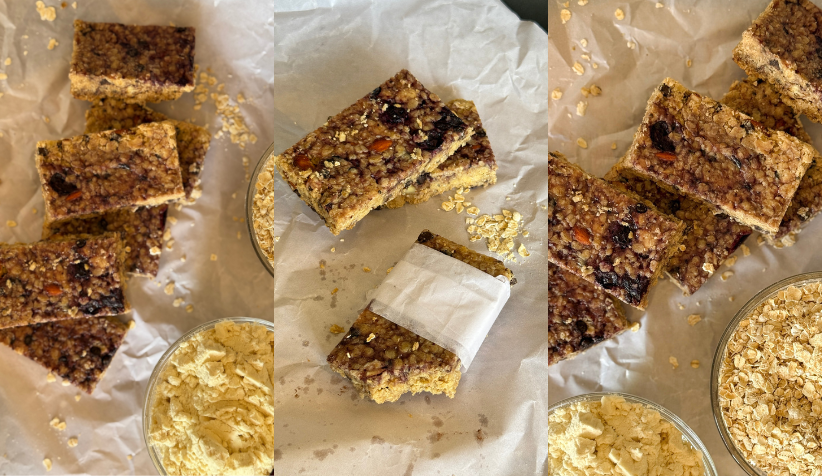
A protein bar can meet every texture target at launch and still fail before the end of its shelf life.
The texture is soft after production. The chew is where it should be. Internal evaluations are positive. The first commercial batches are released.
Then, six to eight weeks later, the bar is noticeably firmer. By the end of shelf life, it may be significantly harder than the product that originally passed approval.
This is one of the most common challenges in high-protein snack development. It is also one of the most difficult to solve because there is rarely a single root cause.
Protein bar hardening is typically the result of several changes occurring simultaneously during storage. Water redistributes throughout the matrix. Proteins form stronger interactions with one another. Sugars react with amino acids. Oxidation alters both proteins and lipids. Together, these changes gradually create a denser and less flexible structure.
The important point is that hardening is rarely a processing issue alone. It is typically a storage stability challenge driven by the interaction of formulation design, ingredient functionality, processing conditions, and time.
Why Hardening Is Difficult To Predict
Most protein bars leave production before the key hardening mechanisms have progressed far enough to produce meaningful texture changes. The product that is evaluated on Day 1 is not the same product that will exist eight weeks later. This creates a challenge during development. A formulation may appear stable because all evaluations are being conducted before significant moisture migration, oxidation, or protein aggregation have occurred.
As a result, texture failures often emerge only after ingredient systems, packaging formats, and shelf-life claims have already been finalized.
The commercial consequences are obvious. A harder bar can reduce consumer acceptance, increase complaints, shorten the practical shelf-life window, and force costly reformulation work. The difficulty is that two bars can become harder for entirely different reasons. A solution that improves one formulation may have little impact on another.
Water Movement Is Often The First Observable Change
One of the biggest contributors to texture change is moisture redistribution.
Protein bars contain ingredients with very different water-binding properties. Proteins, syrups, fibres, polyols, and carbohydrates all compete for available moisture. Immediately after production, water is rarely distributed evenly throughout the system. During storage, it gradually moves until equilibrium is reached.
As moisture redistributes away from protein-rich regions, the protein phase may become less plasticised, contributing to increased firmness and reduced flexibility.
For formulators, this means that measuring moisture alone is rarely enough. “Understanding how water is distributed within the system can be as important as measuring total moisture content.
Protein Chemistry Continues After Production
Protein functionality does not stop once the bar has been packaged.
During storage, proteins can undergo oxidation, structural rearrangement, and aggregation. These changes influence the mechanical properties of the bar. One important pathway involves sulfhydryl groups and disulfide bond formation. As oxidation progresses, proteins can become increasingly interconnected through cross-linking reactions.
These interactions can contribute to the formation of a more interconnected and mechanically rigid network.
Recent studies comparing pea, whey, and rice protein bars have shown substantial increases in hardness alongside measurable changes in protein oxidation markers during storage. Although the extent differs between protein sources, the broader trend is consistent: protein chemistry continues to evolve long after manufacturing is complete.
This suggests that oxidation should not be viewed only as a flavour issue. In many protein bar systems, it may also contribute to texture development during storage.
The Role Of Maillard Reactions
Many high-protein bars contain reducing sugars such as glucose syrup, honey, or fructose-containing ingredients. These sugars can react with amino acids present in proteins, particularly lysine.
Over time, these reactions produce glycated protein structures and increasingly complex molecular aggregates. As those aggregates accumulate, the matrix becomes more rigid. The rate and extent of these reactions depend on formulation composition, storage conditions, moisture levels, and protein source.
Importantly, Maillard chemistry rarely acts alone. It typically occurs alongside moisture redistribution and protein oxidation, making it difficult to isolate its contribution in a finished product.
Nevertheless, research consistently identifies glycation as an important contributor to texture hardening in protein-rich systems.
Lipids Can Influence Texture Too
Fats are often added to improve mouthfeel and processing characteristics, but they also affect shelf-life stability. As lipids oxidize, they generate reactive compounds that can interact with proteins. Some of these interactions contribute to additional cross-linking within the matrix.
Current research suggests that these effects are highly formulation dependent. In some systems, fat appears to slow texture development. In others, it may contribute to structural changes during storage.
This variability highlights a broader reality of protein bar formulation: ingredient functionality cannot be evaluated in isolation. The behaviour of any ingredient depends on the surrounding matrix.
Why Protein Source Matters
Recent research has reinforced something many formulators already observe in practice: not all proteins behave the same during storage.
Whey proteins, pea proteins, and rice proteins each have different structural characteristics, hydration behaviour, and susceptibility to chemical change.
As a result, they do not harden at the same rate or through the same mechanisms.
The 2025 study by Dietrich and colleagues demonstrated that all three protein systems experienced increased hardness during storage, but the magnitude of change and the underlying chemistry differed substantially between proteins.
This finding helps explain why there is no universal solution to bar hardening.
The protein source itself can influence moisture interactions, susceptibility to certain oxidative pathways, and the way structural networks develop during storage.
Why Common Fixes Produce Mixed Results
Many commonly used interventions target only one mechanism.
Adding glycerol may improve flexibility by influencing moisture distribution. Changing sweeteners may reduce glycation. Antioxidants may slow oxidative pathways. These strategies can be useful, but their effectiveness depends on the dominant mechanism within a specific formulation.
If hardening is primarily driven by moisture redistribution, an antioxidant may deliver little benefit. If oxidation is the main driver, changing the humectant system may have limited impact. This is why texture hardening often persists despite multiple reformulation attempts.
The challenge is not necessarily selecting the wrong intervention. It is identifying the wrong mechanism.
Where Protein Selection Becomes Relevant
Protein source selection is often discussed in terms of nutrition, protein claims, or label positioning. For shelf-life stability, functionality can be equally important.
Different proteins interact differently with water. They respond differently to oxidation. They form different structures during storage.
These differences do not guarantee better or worse texture stability, but they do influence how the bar evolves over time.
This is one reason alternative protein sources are receiving increasing attention from formulation teams. The goal is not simply to replace an existing protein. It is to understand how different protein structures behave within the broader formulation.
Mung bean protein is one example. Its composition and functional behaviour differ from many commonly used protein ingredients, which makes it a protein source worth evaluating in applications where texture stability is a development priority. The only reliable way to understand those effects, however, is through structured formulation and shelf-life testing within the intended product system.
The more useful question is not whether a protein source prevents hardening. It is whether its functional behaviour aligns with the specific challenges of the application.
Our work across Ingredient Optimization to Application Development
At OMN9, we have been exploring the application of mung protein across high-protein snack formats, including fortified oat-based protein bar. Our work has focused on this sources operates and influences a highly demanded protein format, alongside other clean label ingredients.
For teams evaluating mung protein in bars or functional snacks, finding a practical starting point is often as valuable as selecting the right ingredient. If you are exploring formulations in this category, we would be happy to share application-development insights, formulation learnings, and early-stage development considerations from our own work.
Reach out to discuss all things food innovation: info@omn9.com
← Why Plant Protein Beverages Fail at Scale: Sedimentation, Grittiness & Solubility Problems. How To Prevent Vegan Mayo From Breaking When Emulsifying? →
If you’re developing high-protein bars, functional snacks, or protein-fortified products, preventing hardening during shelf life requires more than adjusting humectants or processing conditions. OMN9 works with protein systems and ingredient functionality to help formulators better understand moisture interactions, protein behaviour, and texture evolution under real commercial storage conditions, supporting products that maintain their intended eating experience throughout shelf life.
Connect with us to explore how functionally optimized protein ingredients can support texture stability in your next high-protein formulation.
1. Dietrich, M., et al. (2025). Protein oxidation, glycation and texture hardening in pea, whey and rice protein bars during storage. Journal of Food Science. DOI: 10.1111/1750-3841.17663
2. Zheng, X., et al. (2024). Storage-induced physicochemical changes and texture evolution in high-protein nutrition bars. LWT – Food Science and Technology. DOI: 10.1016/j.lwt.2024.115927
3. McMahon, D.J., Adams, S.L., & McManus, W.R. (2009). Hardening of high-protein nutrition bars and the role of moisture migration. Journal of Dairy Science, 92(9), 4330–4338.
https://www.journalofdairyscience.org/
4. Zhu, D., & Labuza, T.P. (2010). Effect of moisture migration and water activity on texture stability of intermediate-moisture protein systems. Journal of Agricultural and Food Chemistry.
https://pubs.acs.org/journal/jafcau
5. Loveday, S.M., Hindmarsh, J.P., Creamer, L.K., & Singh, H. (2009). Physicochemical changes in high-protein model systems during storage and their impact on texture. Food & Function.
https://pubs.rsc.org/en/journals/journalissues/fo
6. Zhou, P., Liu, X., & Labuza, T.P. (2013). Maillard reaction contributions to texture hardening in protein-rich intermediate-moisture food systems. Journal of Agricultural and Food Chemistry.
https://pubs.acs.org/journal/jafcau
7. Labuza, T.P., & Hyman, C.R. (1998). Moisture migration and control in multi-domain food systems. Trends in Food Science & Technology.
https://www.sciencedirect.com/journal/trends-in-food-science-and-technology
8. Damodaran, S., Parkin, K.L., & Fennema, O.R. (2017). Fennema’s Food Chemistry (5th Edition). CRC Press.
https://www.routledge.com/Fennemas-Food-Chemistry/Damodaran-Parkin-Fennema/p/book/9781482208122
9. Shahidi, F., & Zhong, Y. (2010). Lipid oxidation and improving the oxidative stability of food products. Chemical Society Reviews, 39(11), 4067–4079.
https://pubs.rsc.org/en/journals/journalissues/cs
10. Lund, M.N., Heinonen, M., Baron, C.P., & Estévez, M. (2011). Protein oxidation in muscle foods: A review. Molecular Nutrition & Food Research, 55(1), 83–95.
https://onlinelibrary.wiley.com/journal/16134133
11. Singh, H. (2005). Protein interactions and aggregation during food processing and storage. Food Research International, 38(3), 239–247.
https://www.sciencedirect.com/journal/food-research-international
12. Kinsella, J.E. (1979). Functional properties of proteins in foods: A survey. Critical Reviews in Food Science and Nutrition, 7(3), 219–280.
https://www.tandfonline.com/journals/bfsn20
13. Dickinson, E. (2018). Colloidal interactions and stability in protein-based food systems. Food Hydrocolloids, 78, 2–12.
https://www.sciencedirect.com/journal/food-hydrocolloids

Innovating the ideal protein from plants
E-19, Agro Food Park, Boranda, Jodhpur 342012
Pusa Krishi, IARI Pusa Campus, Delhi 110012
Phone: +91 291 2979350
Email: info@omn9.com