
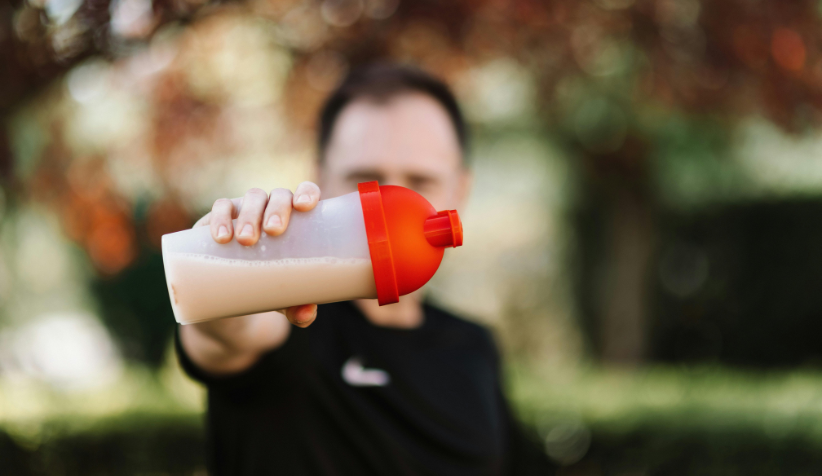
Every formulator has been in this room. The benchtop trial looked clean. The beverage was stable, the protein dispersed evenly, and the mouthfeel was close enough to move forward. The pilot run held up. The samples went to the team, nobody flagged anything serious, and the brief moved toward commercialization.
Then the first commercial batch came back with sediment at the base. Or grittiness that wasn’t there at a smaller scale. Or a shelf-life stability check at week six that showed the suspension had slowly, irreversibly fallen apart.
And the conversation that followed usually sounded like: was it the processing conditions? Was it the homogenizer settings? Did the hold time change? Is the protein batch different?
Sometimes it was one of those things. Usually it wasn’t. Usually the problem was already baked into the choice of protein source, and the scale-up just made it visible enough to be undeniable.
Sedimentation is often rooted in underlying solubility limitations rather than processing conditions alone
This is the distinction that formulation teams lose the most time not making. When a high-protein beverage sediments at scale, the instinct is to look at the manufacturing line first: homogenizer pressure, heat treatment duration, shear, pump speed. These are adjustable variables. They feel solvable. And occasionally, they are contributing factors.
But the underlying mechanism in most plant protein sedimentation cases is simpler and harder to fix downstream: the protein was never truly in solution to begin with. It was dispersed. And dispersion, under the shear conditions of a pilot plant with short hold times and controlled temperatures, looks stable. Under commercial UHT treatment, longer thermal exposure, higher fill weights, and distribution chain temperature variation, the difference between dispersed and dissolved becomes the difference between a product that holds and one that doesn’t.
Plant proteins, by their nature, are structurally compact. Most legume proteins exist as globulins; tightly folded quaternary structures that resist hydration in ways that dairy proteins don’t. When you process a pea or rice protein isolate into a beverage system, you’re working with particles that have limited surface area exposure to water, limited thermodynamic drive to fully hydrate, and a tendency to form aggregates when thermal stress or pH shift disturbs what superficial hydration exists. The dispersion that looked stable in your pilot jug was stable because nothing had stressed it yet. Commercial production provides that stress.
Pea protein presents known formulation challenges in heat-treated beverage systems.
At neutral pH under UHT conditions, pea protein has a documented tendency to aggregate. The proteins denature, expose hydrophobic regions, and begin associating with each other. What was a dispersed suspension becomes a network of insoluble aggregates. Those aggregates sediment. They also contribute to what formulators describe as a gritty, sandy, or chalky mouthfeel: particle sizes above roughly 80–100 microns are detectable on the palate, and aggregated plant proteins routinely reach this range after thermal processing without significant particle size reduction at the point of dissolution.
Solving this with homogenization is possible but expensive. High-pressure homogenization reduces particle size and can temporarily improve suspension stability, but it doesn’t change the protein’s fundamental solubility behavior. Under shelf-life conditions, at temperature fluctuations typical of distribution, the protein continues to aggregate. The sediment comes back. It just takes longer.
Rice protein doesn’t solve this. It introduces its own set of problems. Its solubility profile is among the lowest of any commercially available plant protein isolate, Native rice protein isolates are generally characterized by poor water solubility under neutral pH conditions. Its use in RTD formats requires such extensive upstream processing that the cost-functionality trade-off rarely closes cleanly. Soy is functionally better in many respects but carries allergen declaration requirements that are commercially limiting in a growing proportion of target categories, particularly anything positioned as clean-label or targeted at allergen-sensitive consumers. Wheat protein is categorically excluded from any formulation targeting the gluten-free segment.
None of these are niche limitations. They are industry-wide constraints that formulation teams are working around every development cycle.
The category pressure has also changed in a way that makes this problem more acute, not less.
Protein loading requirements in 2026 are not what they were three or four years ago. The RTD protein beverage market started at 20g per serving claims and has been moving upward. Sports nutrition formats are targeting 30g. Meal replacement beverages need to hit satiety-relevant protein densities. Functional hydration formats are now expected to carry protein alongside other active ingredients without stability compromise.
Every gram of protein you add to a beverage is a gram of material that needs to stay in suspension through UHT, through fill, through distribution, and through a consumer’s shelf or refrigerator. With conventional plant protein sources, the relationship between protein loading and suspension stability is roughly inverse. The more protein you include, the more the system wants to aggregate, sediment, and thicken beyond target viscosity. Formulators are trying to hit higher protein numbers with ingredients that become less cooperative as you push them harder.
The result is a pattern that repeats across development teams: you hit your protein target at bench scale, you lose texture and stability at commercial scale, you reduce inclusion to fix stability, and you lose your protein claim. The brief says 20g. The stable product delivers 14g. The conversation about whether that’s acceptable usually happens very late, after significant development resources have already been spent.
Viscosity is the companion problem that doesn’t always get named separately.
When plant proteins aggregate in aqueous systems, they don’t just sediment. They also viscosify. The aggregates form entangled networks that raise the apparent viscosity of the system, making the beverage thicker, harder to pump through fill lines, and harder to keep within spec across batch-to-batch variation. This is a problem for the sensory experience: plant-protein beverages that miss their texture target are consistently described as pasty, heavy, or coating, but it’s also a production problem. Pump pressures increase. Fill times change. Homogenizer loads increase. The product that formulated cleanly at the bench requires equipment adjustments at scale, which introduces new variability.
Managing viscosity and managing sedimentation simultaneously, with conventional plant proteins, is essentially a matter of choosing which problem is less tolerable. Lower inclusion manages viscosity but reduces protein content. Higher inclusion hits the nutrition target but builds viscosity and aggregation risk. The tools available; hydrocolloids, emulsifiers, pH adjustment, enzyme treatment, can nudge the balance but rarely resolve it without introducing label complexity or additional cost.
This is where the conversation about protein source selection becomes genuinely important, rather than a procurement discussion.
Most beverage formulation briefs specify a protein level and a protein type without much interrogation of whether that protein type can actually deliver the required functionality at that level, through the required processing conditions, on the required shelf-life timeline. Pea protein is selected because it’s familiar, available, and positioned as a default. The formulation then works around its limitations. This is the sequence that produces expensive late-stage failures.
A more productive sequence starts with the thermal processing conditions and stability requirements of the specific application, and then asks which protein sources have solubility and aggregation behavior profiles that are compatible with those conditions. That question opens the field beyond the obvious options.
Mung bean protein is a source that has been receiving increasing technical attention in this context, and the functional basis for that attention is fairly specific. The protein composition of mung bean, including a meaningful proportion of albumins relative to the globulin-dominant profiles of pea and soy, contributes to a different solubility behavior under aqueous conditions. Albumin fractions have generally higher intrinsic solubility than globulins, and this structural difference has observable downstream effects on dispersion stability, aggregation kinetics under heat, and suspension clarity in liquid formats.
Published work on mung bean protein functionality has documented favorable solubility profiles across a range of pH conditions, including the neutral to mildly acidic range that represents most RTD beverage applications. The hydration behavior of mung bean protein has also shown less tendency toward the rapid, irreversible aggregation that characterizes pea protein under thermal stress, though the extent of this difference varies with processing conditions, inclusion level, and the specific fraction being used.
This doesn’t mean mung bean protein is a simple drop-in substitute that resolves sedimentation without any formulation work. It doesn’t, and any characterization in those terms would be misleading. What it means is that the solubility limitations which make pea and rice protein fundamentally difficult to work with in RTD formats are not universal properties of all plant proteins. Different sources, processed differently, exhibit meaningfully different behavior in liquid systems, and that difference is worth evaluating systematically rather than defaulting to the category leader because it’s familiar.
OMN9 M80 sits in this space as a formulation ingredient worth serious bench evaluation for formulators working through exactly these problems.
It is derived from mung bean and carries the protein composition and processing profile that the technical work on mung bean functionality would lead you to expect. For applications where sedimentation, grittiness, and suspension stability are live problems: RTD protein beverages, plant-based nutritional drinks, protein-fortified meal replacements, the relevant question is whether its solubility and aggregation behavior under your specific thermal processing conditions outperforms your current ingredient stack. That’s a bench question, not a positioning question.
If your current RTD formulation is delivering acceptable stability at bench and failing at commercial scale, the protein source is often a major contributing variable. The processing line can be adjusted at the margins. The thermal stability and solubility profile of your protein source cannot. Changing the latter is the intervention that actually changes the outcome.
The ingredient that disperses cleanly at bench, survives UHT without significant aggregate formation, and holds its suspension through six months of shelf life is the ingredient that doesn’t generate rework cycles, late-stage reformulation briefs, and the kind of commercial failure that tends to be attributed to everything except the actual cause.
If you’re in active development on a high-protein RTD or liquid format and sedimentation or grittiness has appeared at any stage of your scale-up, evaluating mung bean protein through a structured ingredient trial is the logical next step. Not because it will automatically solve the problem, but because the formulation science suggests it addresses the right variable. And at this stage in the evolution of plant-based beverages, working with ingredients that are functionally better suited to specific processing conditions is the only approach that consistently helps close the gap between bench trial and commercial shelf.
← How to Replace Egg In Your Next Formulation Why Protein Bars Harden During Shelf Life →
If you’re developing high-protein RTD, plant-based, or nutritional beverage formulations, solving sedimentation and grittiness requires more than adjusting processing parameters. OMN9 delivers plant protein solutions designed to support improved solubility, suspension stability, and texture performance under real commercial processing conditions, helping formulators build systems that hold beyond bench trials, through UHT, shelf life, and distribution.
Connect with us to explore how functionally optimized protein systems can strengthen your next beverage formulation.
1. Food Hydrocolloids – “Extraction, Physicochemical Characteristics and Functional Properties of Mung Bean Protein” (2018): https://www.sciencedirect.com/science/article/pii/S0268005X1730005X
2. Food Chemistry – “Physicochemical, Functional and Antioxidant Properties of Mung Bean Protein Enzymatic Hydrolysates” (2022): https://www.sciencedirect.com/science/article/pii/S0308814622013590
3. Food & Nutrition Research – “Mung Bean Proteins and Peptides: Nutritional, Functional and Bioactive Properties” (2018): https://pubmed.ncbi.nlm.nih.gov/29545737/
4. Food Hydrocolloids – “Advances in Plant Protein Extraction: Mechanism and Recommendations” (2021): https://www.sciencedirect.com/science/article/pii/S0268005X21001501
5. Food Chemistry – “Structure, Functionality, and Applications of Pea Protein in Food Systems” (2023): https://www.sciencedirect.com/journal/food-chemistry
6. Critical Reviews in Food Science and Nutrition – “Plant-Based Protein Ingredients: Functionality and Challenges in Beverage Applications” (2022): https://www.tandfonline.com/toc/bfsn20/current
7. Foods – “Current Challenges in Formulating High-Protein Plant-Based Ready-to-Drink Beverages” (2023): https://www.mdpi.com/journal/foods
8. Food Research International – “Aggregation Behavior of Plant Proteins During Thermal Processing in Beverage Systems” (2021): https://www.sciencedirect.com/journal/food-research-international
9. Journal of Food Engineering – “Effect of Ultra-High Temperature Processing on Stability and Particle Size Distribution of Protein Beverages” (2019): https://www.sciencedirect.com/journal/journal-of-food-engineering
10. Journal of Food Science – “Influence of Homogenization Pressure on Physical Stability of Plant Protein Suspensions” (2018): https://ift.onlinelibrary.wiley.com/journal/17503841
11. Food Hydrocolloids – “Rheological Behavior and Stability Mechanisms of Protein Suspensions in Liquid Food Systems” (2020): https://www.sciencedirect.com/journal/food-hydrocolloids
12. Comprehensive Reviews in Food Science and Food Safety – “Rice Protein: Extraction, Characteristics, and Applications in Food Systems” (2021): https://ift.onlinelibrary.wiley.com/journal/15414337
13. Foods – “Rice Protein and Rice Protein Hydrolysates in Food Products: Functional Properties and Limitations” (2022): https://www.mdpi.com/journal/foods
14. Food Chemistry – “Solubility and Functional Characteristics of Rice Protein Isolates Under Different pH Conditions” (2019): https://www.sciencedirect.com/journal/food-chemistry
15. Beverages – “Ready-to-Drink Protein Beverages: Stability, Sedimentation, and Texture Optimization Strategies” (2023): https://www.mdpi.com/journal/beverages
16. Current Opinion in Food Science – “Challenges in Commercialization of Plant Protein Beverages” (2022): https://www.sciencedirect.com/journal/current-opinion-in-food-science
17. Food Structure – “Relationship Between Protein Structure and Functional Stability in Plant-Based Liquids” (2021): https://www.sciencedirect.com/journal/food-structure
18. Journal of Texture Studies – “Sensory Detection Thresholds of Particulate Matter in Liquid Food Systems” (2016): https://onlinelibrary.wiley.com/journal/17454603
19. Food Biophysics – “Particle Size Perception and Mouthfeel in Protein-Fortified Beverage Systems” (2017): https://link.springer.com/journal/11483
20. Trends in Food Science & Technology – “Protein Fortification Trends and Stability Challenges in RTD Beverage Systems” (2024): https://www.sciencedirect.com/journal/trends-in-food-science-and-technology
21. Annual Review of Food Science and Technology – “Future Directions in Plant Protein Beverage Formulation” (2024): https://www.annualreviews.org/journal/food

Innovating the ideal protein from plants
E-19, Agro Food Park, Boranda, Jodhpur 342012
Pusa Krishi, IARI Pusa Campus, Delhi 110012
Phone: +91 291 2979350
Email: info@omn9.com